Florida Beach Wedding Catering Guide: Food, Drinks & Logistics for Your Coastal Celebration
By Florida Weddings Editorial Team · · 12 min read
Food is the great equalizer at any wedding. You can have the most spectacular sunset, the most beautiful floral arch, and the most heartfelt vows — and guests will still talk about what they ate. For a Florida beach wedding, catering comes with its own wonderful set of opportunities and practical considerations that are worth understanding before you start comparing menus.
The good news: Florida’s culinary identity — fresh Gulf seafood, tropical fruits, citrus-bright flavors, and farm-to-table coastal cuisine — is tailor-made for outdoor celebrations. The challenge: heat, humidity, logistics, and the reality that most beach ceremony locations are not adjacent to a commercial kitchen. Planning smart means understanding both sides of that equation.
This guide covers everything you need to know about catering your Florida beach wedding — from cocktail-hour bites to full reception dinners, from food safety in the heat to the caterers who do this well. Whether you’re planning an intimate elopement or a full reception on the sand, your food choices will shape how your guests remember the day.
- • Choose caterers experienced with outdoor, off-site service — not just restaurant-style setups
- • Plan your menu around the heat: cold stations, passed appetizers, and covered displays keep food safe and appetizing
- • Cocktail receptions and station-style dinners outperform plated dinners on the beach
- • Hydration is a guest care priority — plan for infused water stations and cold beverages from the start
- • Work with a planner who has vendor relationships — the right catering referral can save you weeks of research
Understanding the Logistics of Beach Catering
Most Florida beach ceremonies take place in public or semi-public spaces — state parks, county beach access points, resort beach areas — and none of those spaces have a kitchen. Your caterer needs to bring everything: prep equipment, chafing dishes or cooling units, serving staff, and often their own tables and linen. This is fundamentally different from catering a ballroom event, and it is why experience with outdoor, off-site service matters enormously.
Ask every caterer you interview a simple question: how many beach or outdoor events have you catered in the last 12 months? A vendor who does outdoor events regularly will have systems for temperature management, transportation, setup timing, and staff coordination that a restaurant-focused caterer may not. The best beach caterers in Florida treat outdoor logistics as a core competency, not an afterthought.
Power access is another practical consideration. If your caterer needs electric warmers, refrigeration, or lighting, they need a power source — which means either access to a generator or a catering van equipped with its own power system. Discuss this explicitly before booking. At venues like resort beach areas and some county parks, limited power hookups may be available, but at many public beach locations, the caterer needs to be entirely self-sufficient.
Menu Styles That Work Best on the Beach
Certain catering formats are naturally better suited to beach settings than others. Here is how the major styles compare in a Florida outdoor context:
Cocktail receptions with heavy appetizers are the most popular format for Florida beach weddings, and for good reason. Passed hors d’oeuvres allow guests to mingle, explore the scenery, and eat at their own pace without being tied to a table. For ceremonies in the 20–50 guest range, a generous cocktail reception with 8–10 passed items often satisfies completely without requiring a seated dinner service. Typical coastal-inspired options include shrimp cocktail, crab-stuffed mushrooms, smoked fish dip crostini, caprese skewers, and mini crab cakes — all items that work well passed or on a small station.
Station-style receptions work beautifully for larger groups. A carving station with slow-roasted meats, a seafood raw bar, a pasta or taco station, and a charcuterie display give guests variety and keep the experience feel festive rather than formal. Stations also reduce the pressure on staff timing — guests serve themselves on their own schedule, which matters when you’re working with a beach sunset timeline where everyone’s attention will naturally drift toward the water.
Plated, seated dinners are technically possible on the beach but require more infrastructure: rental tables, chairs, full linen service, waitstaff for multiple courses, and lighting for evening service. If a plated dinner is important to you, consider hosting the ceremony on the beach and moving the reception to a nearby indoor or covered venue. Many of Florida Weddings’ packages are designed exactly this way, with the ceremony at the water’s edge and the reception at a restaurant private room, rooftop, or event space nearby. This combination gives you the best of both worlds.
Brunch and daytime receptions deserve more consideration than they typically get. A late-morning or midday beach wedding with a brunch reception avoids Florida’s afternoon heat entirely, fits naturally with the cooler light of mid-morning, and creates a laid-back, celebratory atmosphere that guests genuinely love. Brunch catering — avocado toast stations, yogurt parfait bars, a mimosa and bloody mary cart, fresh tropical fruit, and eggs prepared to order — also tends to be more affordable than dinner service, which matters if you’re managing a thoughtful budget.
Florida-Inspired Menu Ideas
One of the underrated joys of a Florida beach wedding is leaning into the state’s culinary identity. You are in a place famous for stone crab, pink shrimp, Gulf grouper, citrus groves, tropical produce, and a Cuban-influenced food culture that produces some of the most distinctive flavors in the country. Here are menu ideas that feel genuinely Florida:
Seafood centerpieces: A Gulf shrimp boil station — seasoned with Old Bay and served with corn, andouille, and crusty bread — is a crowd-pleaser that photographs beautifully and creates a convivial, hands-on dining experience. A stone crab claw display (in season October through May) is a luxury touch that signals “this is Florida” more powerfully than almost any other single item. A seafood raw bar with local oysters, shrimp, and crudo is equally effective.
Tropical flavors: Mango habanero glazed chicken skewers. Key lime tarts or Key lime cheesecake bites. Guava and cream cheese pasteles. Coconut shrimp with a citrus dipping sauce. Watermelon and feta salad with fresh mint. These are items that feel at home in Florida’s heat and connect the food to the landscape in a way that generic wedding catering never does.
Local fish: Grouper — Florida’s iconic Gulf catch — grilled or blackened and served as a slider or over saffron rice is a menu anchor that impresses guests unfamiliar with how exceptional fresh Florida fish can be. Mahi-mahi tacos with mango salsa and cabbage slaw are a lighter option that works beautifully for afternoon service.
Cuban-inspired elements: Lechon asado (slow-roasted pork) with black beans and rice, mini Cuban sandwich sliders, and plantains (maduros or tostones) are crowd-pleasers in South Florida especially, but resonate across the state. A Cuban press sandwich station where guests watch sliders being pressed to order creates an interactive, aromatic focal point.
Food Safety in Florida’s Heat
This is not a topic to handle casually. Florida summers combine high temperatures (often 88–95°F on the beach) with significant humidity, creating conditions where food safety requires active management. The FDA’s two-hour rule — perishable food should not sit at temperatures between 40°F and 140°F for more than two hours — becomes a two-hour rule you can hit quickly in direct Florida sunshine.
Here is how experienced outdoor caterers manage this in Florida:
Cold items — shrimp cocktail, oysters, salads — should be served over ice, in refrigerated display cases, or in small batches that are replenished frequently from chilled transport containers. Any cold protein display should never sit unrefrigerated for more than 90 minutes in summer conditions. Hot items in chafing dishes need to maintain 140°F minimum, which requires Sterno or electric warming consistent enough to hold temperature despite ocean breezes.
Experienced beach caterers bring dedicated temperature logs, food thermometers, and clearly organized cold storage in their catering vehicles. They train staff to rotate displays on a fixed schedule rather than waiting until a dish looks depleted. If you are interviewing caterers and food safety protocols come up as an afterthought, that is a signal worth noting.
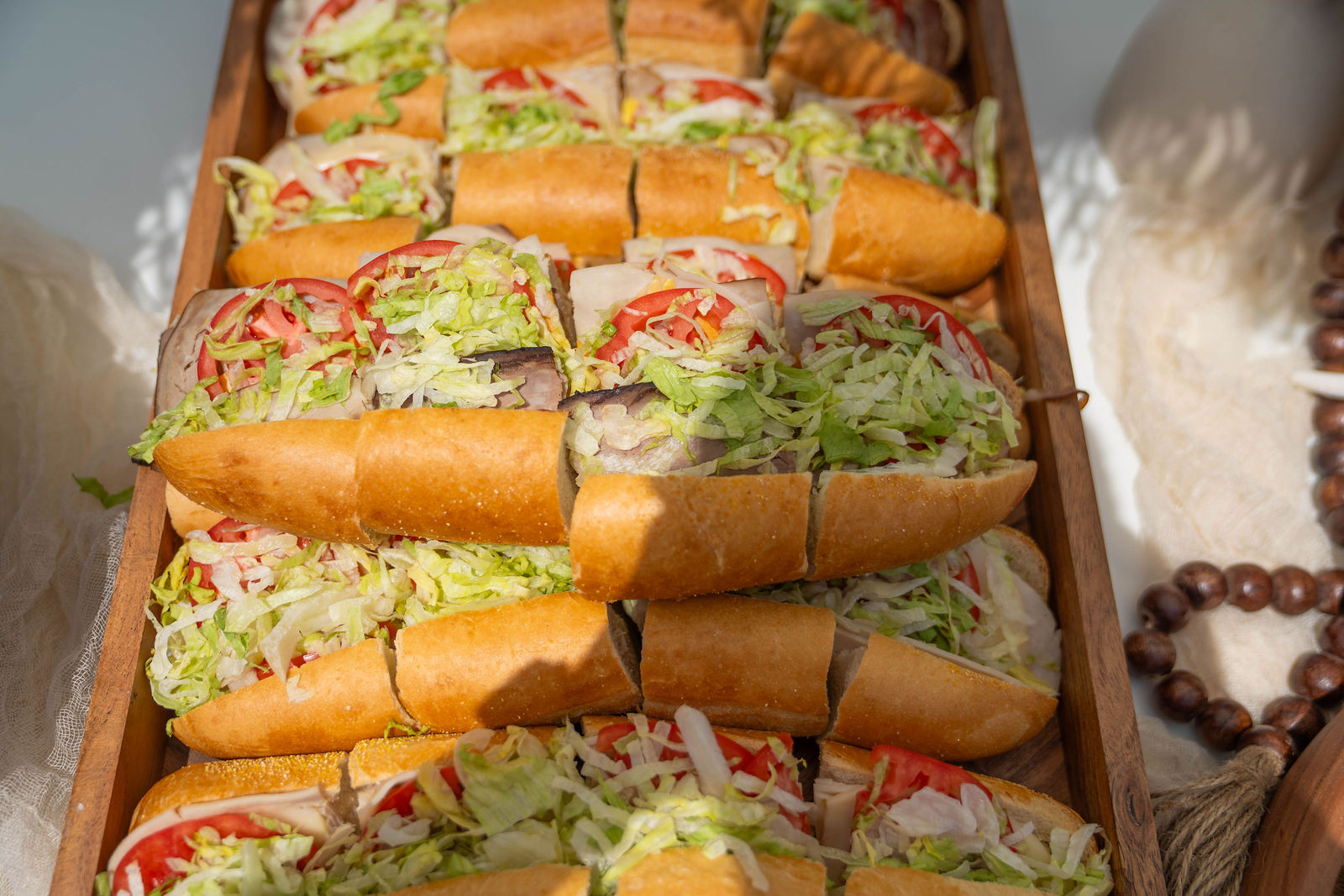
The simplest protective strategy: design your menu around items that are inherently safe outdoors. Room-temperature or ambient foods — bread, charcuterie, certain salads, vegetable crudités, fruit that has been properly chilled — carry less risk than proteins. Moving your most temperature-sensitive items (seafood, cream-based sauces) to a cocktail hour served in a shaded or air-conditioned space, rather than the beach itself, solves the problem elegantly.
Beverages: Planning Your Beach Bar
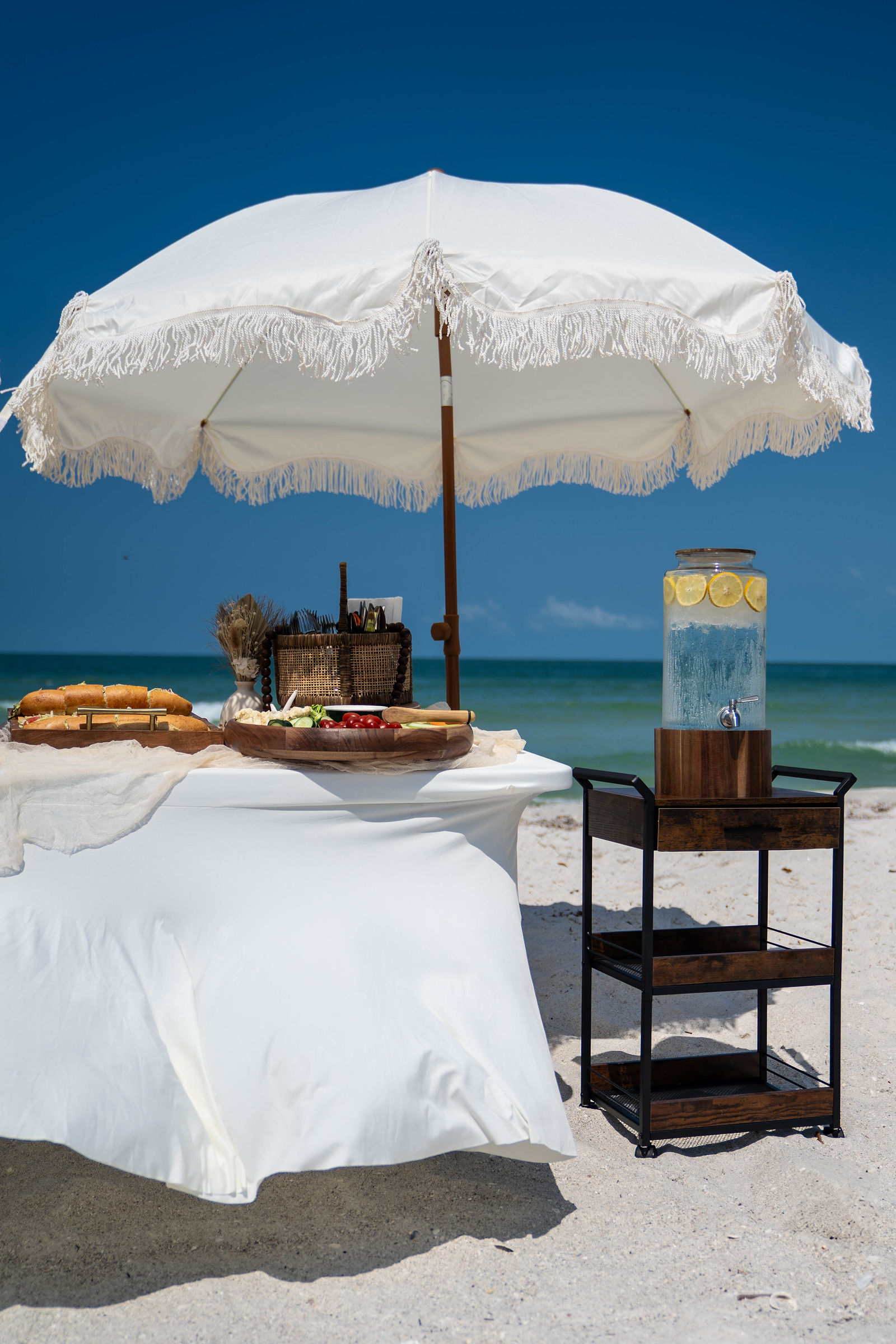
Hydration is a guest care priority at a Florida beach wedding that cannot be understated. Heat, salt air, and celebration are a combination that dehydrates people faster than they realize. Plan for water consumption specifically — an infused water station with cucumber-mint, citrus, or watermelon options not only keeps guests hydrated but also adds a beautiful visual element to the catering setup.
For alcohol service, the key permit consideration is that most Florida public beaches do not allow open containers of alcohol without a special event permit — and some county parks prohibit alcohol entirely. This is a detail your planner should confirm before you build a bar program around a specific location. Many couples avoid this issue by handling cocktails on a nearby terrace or venue space and keeping the beach itself ceremony-focused and alcohol-free.
If your reception moves to a venue, craft cocktail stations are a popular choice. Signature cocktails with Florida-themed names — a “Gulf Breeze Spritz,” a “Key Lime Margarita,” a “Sunset Sangria” — personalize the bar program and give guests something to photograph and talk about. A local craft beer selection spotlighting Florida breweries (Cigar City, Due South, Funky Buddha) pairs well with seafood-forward menus.
Non-alcoholic options deserve the same attention as the bar: a lemonade station with seasonal flavor add-ins, sparkling water with fresh citrus, iced tea in Southern-style sweet and unsweetened versions, and coffee and espresso service toward the end of the evening. Guests who are not drinking alcohol should have choices that feel equally festive, not just water from a jug.
The Wedding Cake Question
Florida heat affects cake in predictable ways: buttercream melts, fondant can develop a sticky exterior, and any stacked cake left in direct sun for more than 20 minutes starts to lose structural integrity. The solutions are practical and well-established among Florida’s experienced wedding bakers:
Keep the display cake in air conditioning until the moment of the cutting — bring it out for the ceremony and photograph it, then move it inside immediately. If you are having a cutting on the beach, consider a display cake that is primarily for show (often called a “dummy tier” topped with a small real tier), with a sheet cake in an air-conditioned space that gets sliced for guests.
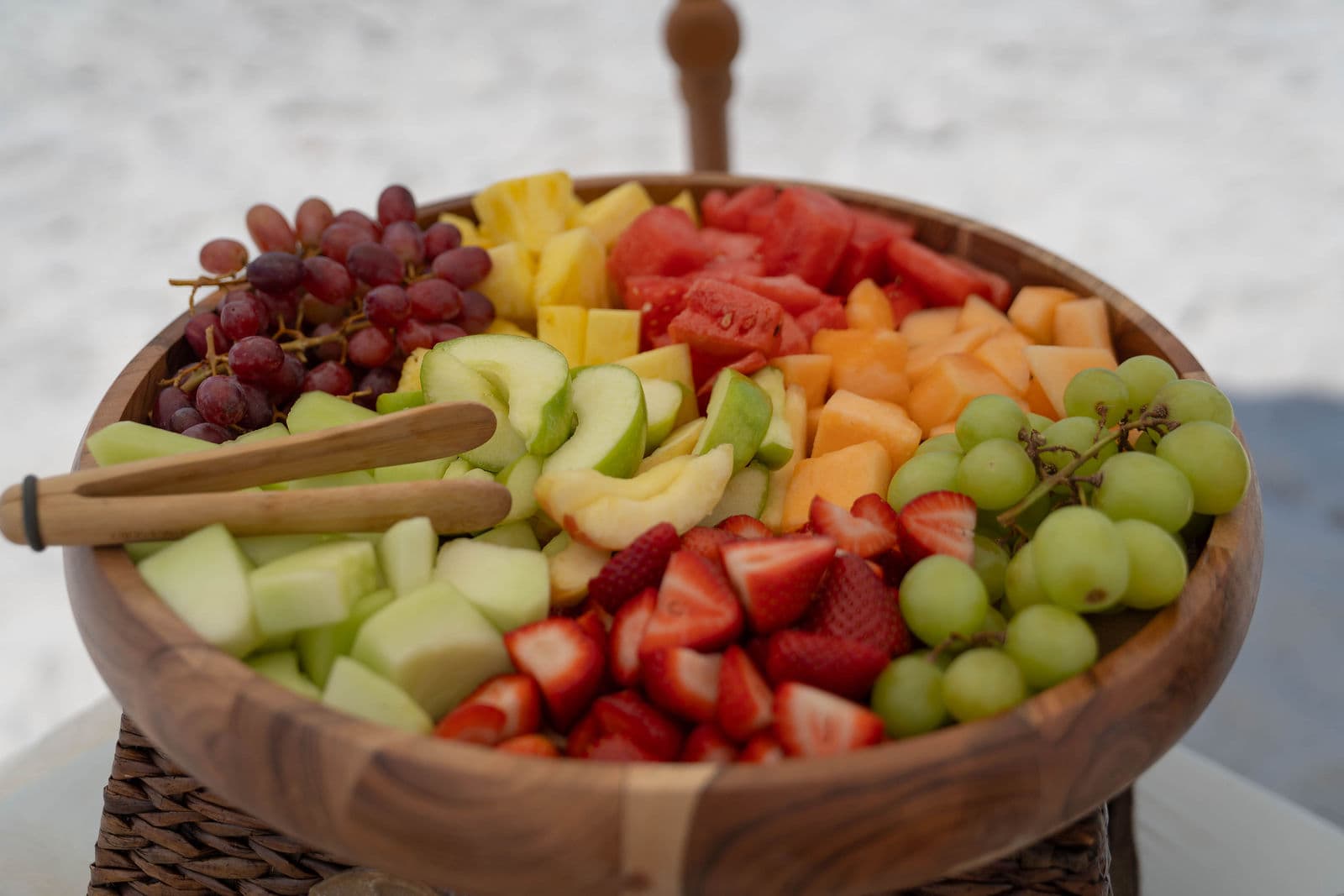
The trendiest alternatives to a traditional cake for Florida beach weddings: an individual dessert station (macarons, mini cheesecakes, brownie bites, Key lime tarts), a tropical fruit display with dipping sauces, or a donut wall with glazes in coastal colors. These are all naturally more heat-stable than a layered cake and allow for more guest interaction.
If you are committed to a traditional wedding cake, talk to your baker specifically about heat tolerance. Italian meringue buttercream and Swiss meringue buttercream hold up better than American buttercream in heat. A whipped cream frosting, while delicious, is essentially unworkable outdoors in Florida summer. Your baker should have a clear plan for transport and presentation that accounts for your ceremony location’s temperature conditions.
Budget Guidance: What Beach Wedding Catering Costs
Catering costs for Florida beach weddings vary significantly based on format, guest count, menu complexity, and the caterer’s experience level. Here is a realistic range to use for planning purposes:
Cocktail-style appetizer reception (20–50 guests): $45–$85 per person for passed hors d’oeuvres with two to three stations. At the lower end, you are looking at a domestic bar and standard passed items. At the higher end, seafood-forward menus with premium bar service.
Full station-style dinner reception (50–100 guests): $95–$175 per person depending on menu, staffing, and rental inclusions. Seafood-heavy menus with full bar service and linen rental trend toward the higher end.
Elopement or micro-wedding catering (2–20 guests): Options range from a private dinner at a local restaurant (where you’re not paying off-site catering fees) to a private chef experience at $150–$300+ per person for something truly elevated.
One significant budget consideration: off-site catering fees. Bringing a caterer to a beach location that has no kitchen infrastructure adds transportation, staffing, and equipment costs that a venue-based caterer does not face. This is legitimate and worth budgeting for — the per-person cost of outdoor catering is typically 20–35% higher than comparable indoor service for this reason.
If budget is a primary consideration, our package comparison page shows options at every price point, including ceremony-only packages starting at $375 that pair beautifully with a restaurant dinner reservation rather than on-site catering.
Working With Florida Weddings on Your Catering Plan
One of the most tangible benefits of working with an experienced destination wedding planner is vendor network access. Over 22 years and thousands of Florida ceremonies, we have worked alongside the outdoor caterers who consistently deliver — the ones who show up with the right equipment, manage the heat intelligently, work within beach permit constraints, and actually make the food taste as good at the event as it did at the tasting.
We refer clients to caterers who have earned that recommendation through repeated, successful performance. We also help you think through the format question — ceremony-only vs. ceremony plus reception, beach-based vs. venue-based, cocktail reception vs. seated dinner — based on your guest count, budget, and the specific location you’re working with. Some beaches and parks in Florida have restrictions that affect catering logistics in ways that are not obvious until you have done it a dozen times.
Our wedding packages are designed around the ceremony experience, and we are happy to help extend the planning conversation to your reception, catering, and full-day logistics. Explore our Florida destinations to find the beach that fits your vision, then contact us to talk through the full day — ceremony, reception, catering, and everything in between. Your celebration deserves every detail handled with the same care we bring to the vows themselves.
About the Author
With over 22 years of experience and 5,200+ beach ceremonies across Florida, our editorial team shares first-hand planning insights.
Related Posts
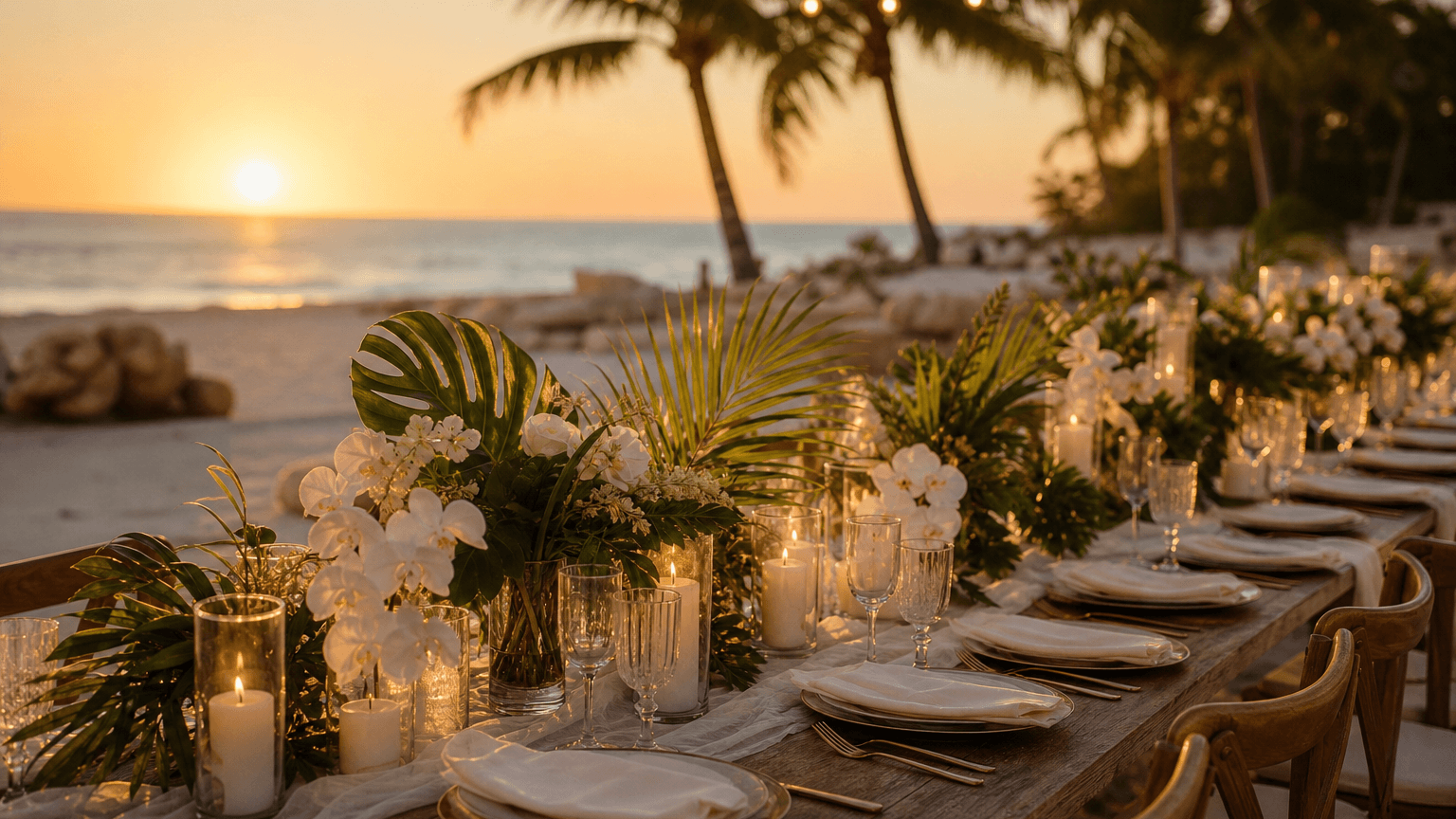
Florida Beach Wedding Rehearsal Dinner Guide: Ideas, Timing, and Locations
Planning a Florida beach wedding rehearsal dinner? Get timing, venue, and menu ideas plus real budget tips from 22+ years and 4,000+ weddings planned statewide.
Read More
Florida Beach Wedding Officiant Guide: What They Do and How to Choose Yours
What does a Florida beach wedding officiant do? Get vow-writing options, marriage license filing details, and tips from 22+ years and 4,000+ weddings.
Read More
Florida Beach Wedding Insurance Guide: What It Covers and Whether You Need It
Do you need Florida beach wedding insurance? See what it covers, what it costs, and how hurricane season affects your ceremony from 22+ years of experience.
Read MoreContinue Planning
Explore wedding package pricing, top Florida destinations, and side-by-side package comparisons.