Florida Beach Wedding Golden Hour Photography Guide: Perfect Timing at Every Destination
By Florida Weddings Editorial Team · · 9 min read

There is a moment at every Florida beach wedding that photographers live for — and couples never forget. The sun dips toward the horizon, the sky ignites in amber and rose, and the ocean turns to liquid gold. It lasts roughly 45 to 60 minutes. It is called golden hour, and scheduling your ceremony around it is one of the single best decisions you can make for your beach wedding photos.
After 22+ years and 4,000+ ceremonies across Florida's Gulf and Atlantic coasts, our team at Florida Weddings has learned exactly when golden hour falls at every major wedding destination — and how to help couples make the most of it. This guide breaks it all down: timing by beach, what changes by season, and the practical photography tips that turn already-beautiful photos into something truly extraordinary.
- • Golden hour lasts 45–60 min before sunset — start your ceremony 90 min before for ideal light
- • Gulf Coast beaches (Siesta Key, Clearwater, Anna Maria) face west — unobstructed sunset views
- • Atlantic beaches (Cocoa Beach, Fort Lauderdale) get sunrise golden hour instead
- • Summer sunset times: 8:00–8:30 PM. Winter sunset times: 5:30–6:00 PM — plan accordingly
- • Overcast days often produce the softest, most flattering light of all
What Is Golden Hour and Why Does It Matter for Beach Weddings?
Golden hour is the period of natural light that occurs in the final 60 minutes before sunset (and the first 60 minutes after sunrise). During this window, the sun sits low on the horizon, which scatters shorter blue wavelengths and lets warmer amber, orange, and gold tones dominate. The result is soft, directional, deeply flattering light that wraps around subjects rather than casting harsh shadows from overhead.
For beach weddings specifically, golden hour does something almost magical: it sets the water ablaze, casts a warm glow across white sand, and makes skin tones look radiant in photos. The natural drama of the sky becomes your backdrop — no decorations required. Many couples who have seen their golden-hour ceremony photos describe them as looking like they were shot in a dream.
Timing your ceremony to begin roughly 90 minutes before sunset means you will be exchanging vows as the light peaks, and your portrait session immediately after the ceremony will unfold during the best 20–30 minutes of the day. Our wedding packages include experienced photographers who are experts at working with Florida's coastal light at every time of year.
Gulf Coast vs. Atlantic Coast: A Critical Difference
Florida's beaches split into two very different photographic experiences depending on which coast you choose — and this matters enormously for golden hour.
Gulf Coast beaches — including Siesta Key, Clearwater, Anna Maria Island, Fort Myers, and Naples — all face west. This means you get a full, unobstructed sunset directly over the water. The sun sets into the Gulf of Mexico and the light show is extraordinary. These beaches are widely considered among the best sunset wedding venues in the entire United States for this reason.
Atlantic Coast beaches — including Cocoa Beach and Fort Lauderdale — face east. The sun sets behind you, not over the water. You will still get beautiful golden-hour light during evening ceremonies, but the warm glow comes from behind the camera rather than from the horizon line. These beaches are exceptional for sunrise ceremonies — the sun rises over the Atlantic and the golden light falls directly on the beach and the water.
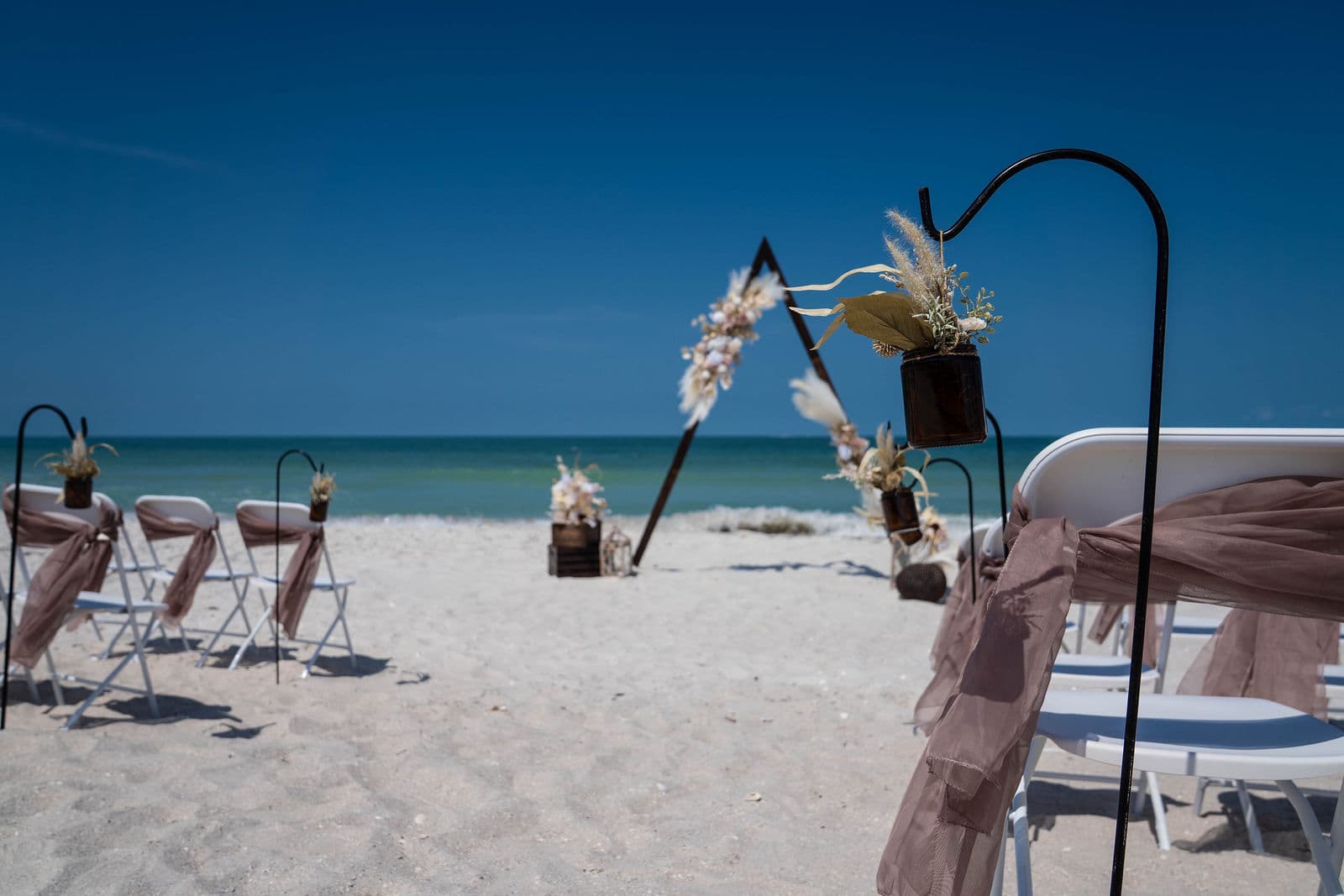
Golden Hour Timing by Florida Wedding Destination
Florida spans about 500 miles from Pensacola in the Panhandle to Key West at the southern tip, and sunset times shift meaningfully between north and south Florida — especially in winter. Here is a practical guide by destination:
Siesta Key & Sarasota
Consistently rated one of the top sunset beaches in the world, Siesta Key is a golden-hour paradise. Summer sunset: approximately 8:15 PM. Winter sunset: approximately 5:45 PM. Ceremony start recommendation: 90 minutes before. The quartz sand here reflects light with an unusual brightness that amplifies the golden tones even further. If a sunset ceremony is your top priority, Siesta Key is the benchmark.
Clearwater Beach
Clearwater's wide, west-facing shoreline gives you a clear sightline to the horizon. Summer sunset: approximately 8:20 PM. Winter sunset: approximately 5:50 PM. Clearwater is slightly north of Sarasota, so winter sunsets are a few minutes later. The pier provides an excellent focal point for ceremony photos, and the beach width allows for dramatic wide shots during the golden-hour glow.
Anna Maria Island
Anna Maria Island's quieter, more intimate atmosphere makes it a favorite for couples who want the sunset without the crowds. Summer sunset: approximately 8:15 PM. Winter sunset: approximately 5:45 PM. The island's smaller scale means the beach rarely feels busy during ceremony time. Old-Florida charm — wooden docks, native vegetation, calm Gulf waters — frames portraits beautifully.
Fort Myers Beach & Captiva Island
South of Sarasota, Fort Myers Beach and Captiva Island offer a slightly earlier sunset in winter — around 5:30 PM by December. Summer sunsets stretch to 8:10 PM. The shallower Gulf waters in this area produce spectacular color reflections at low tide, especially during the warmest months when atmospheric haze creates deep amber and crimson skies.
Cocoa Beach (Atlantic — Sunrise Golden Hour)
Cocoa Beach faces east, so evening golden hour light comes from behind rather than from the water. However, sunrise ceremonies here are breathtaking: the sun rises directly over the Atlantic, casting warm light on the beach and waves from the very first moment. Summer sunrise: approximately 6:30 AM. Winter sunrise: approximately 7:15 AM. If you love the idea of a morning ceremony followed by a beach breakfast reception, Cocoa Beach delivers a genuinely unique experience.
Seasonal Adjustments: How Florida's Calendar Affects Your Photos
Florida does not have dramatic seasons the way northern states do, but there are meaningful photographic differences between its dry season (November–April) and rainy season (May–October).
- November–February (Dry Season): Clearer skies and lower humidity mean crisp, defined color in photos. Sunsets can be vivid and saturated. Sunset times are earliest — plan your ceremony start accordingly. Temperatures are comfortable (68–76°F), which means you and your guests will look and feel relaxed in photos.
- March–May: Temperatures rise and humidity increases gradually. Afternoon haze can actually enhance golden-hour warmth. Sunset shifts later as daylight saving begins. A particularly good photography window — warm light, blooming coastal vegetation as a backdrop.
- June–September (Rainy Season): Afternoon thunderstorms are common but typically clear by evening. Post-storm skies often produce the most dramatic and colorful sunsets of the entire year — deep reds, layered clouds, extraordinary color. Risk is higher, but the reward when skies clear is extraordinary. Our team monitors forecasts and adjusts timing as needed.
- October: Transitional and consistently beautiful. Humidity eases, skies are often clear, sunset times hover in the 7:00–7:30 PM range. October is one of the most consistently gorgeous photography months across all Florida destinations.
Photography Tips for Stunning Florida Beach Wedding Photos
Even with perfect golden-hour timing, a few practical details separate good beach wedding photos from truly stunning ones. Our photographers and planning team share these with every couple during their pre-wedding consultation.
- Face the sun (or flank it): During golden hour, ask your photographer to position you so the warm light falls on your faces — not from directly behind you, which creates silhouette effects. Both approaches are beautiful, but knowing which look you want helps your photographer plan the angle.
- Reserve 20–30 minutes for portraits: The best light window is short. If you build portrait time immediately after the ceremony, you can get breathtaking shots before the sky shifts. Many couples build a brief "reveal" moment or champagne toast while the photographer works the light.
- Choose light-colored or warm-toned attire: White, ivory, blush, champagne, and soft gold all photograph beautifully in golden-hour light. Dark navy or black can look heavy against bright white sand and bright sky. Bridesmaids in dusty rose or sage complement the natural palette perfectly.
- Overcast days are underrated: A thin cloud layer acts as a natural diffuser — it softens shadows and produces even, flattering light across your entire face. Many of the most polished, editorial-style wedding photos are taken on slightly overcast days. Do not panic if the sky is not perfectly clear on your wedding day.
- Watch for wind in hair and fabric: Beach wind is real and constant. Embrace it — flowing fabric and wind-tossed hair are a signature of Florida beach wedding photography and look incredible in movement shots. Talk to your hairstylist about a style that stays beautiful in a coastal breeze.
- Tidal timing matters: Low tide reveals wider, firmer, more photogenic shoreline. High tide can push the waterline close to ceremony setups. Ask your planner to cross-reference your sunset time with the local tide chart — we do this automatically for every ceremony we book.
What to Expect With Florida Weddings Photography Packages
Photography is included in many of our wedding packages, from our Simply Beautiful ceremony up through our full Elegance and Premier packages. Every photographer in our network is experienced with Florida beach conditions — they know the angles, they know the light windows, and they communicate directly with you in the weeks before your wedding to coordinate timing.
If you already have your own photographer, we will share all relevant local timing guidance — sunset times, tide charts, beach access details, and permit windows — so they arrive fully prepared. Our team's job is to make sure every vendor on your wedding day has exactly what they need to do their best work.
Curious about which packages include photography? Browse our full package comparison page to see exactly what is included at each level, or visit our FAQ section for answers to common photography and timing questions.
Ready to Plan Your Florida Beach Wedding?
Golden-hour ceremonies are not an accident — they are a planning decision. And planning is exactly what we do. Florida Weddings has guided 4,000+ couples through every detail of their beach ceremonies across all of Florida's most beautiful destinations. From choosing the right beach for the light you want to coordinating every vendor around your ideal ceremony window, our team makes the process simple, affordable, and stress-free.
Explore our destinations to find the beach that fits your vision — Gulf Coast sunsets, Atlantic sunrises, Panhandle emerald waters, or Keys tropical charm. Then contact our team to check availability for your date. We would love to help you plan a ceremony timed perfectly to the most beautiful light on earth.
About the Author
With over 22 years of experience and 5,200+ beach ceremonies across Florida, our editorial team shares first-hand planning insights.
Related Posts
Captiva Island Weddings: Why Lighting Matters for Photos
Planning a Captiva Island Florida destination wedding? Discover why natural lighting and sunset timing are key to stunning beach ceremony photos.
Read MoreContinue Planning
Explore wedding package pricing, top Florida destinations, and side-by-side package comparisons.